
Guide

Workout Plan for Women: Why Strength Training Comes First

A good workout plan for women looks a lot like a good workout plan for anyone: strength training two to four times a week, built on squats, hinges, presses and rows, with weights that slowly go up. There's no special "toning" method and no reason to stick to tiny pink dumbbells. Your muscles respond to the same thing everyone's do: a challenge that grows over time.

What differs from person to person is your goal, your schedule, your experience and your stage of life. A plan should adjust to those, not to assumptions about what women "should" train.

Download on the App Store3 days free
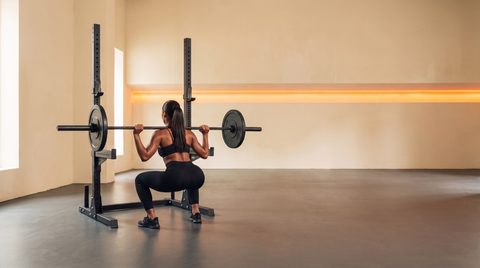
Woman doing a barbell squat in a bright studio

Why lifting weights is worth it

Strength training does a lot more than change how you look. It's commonly recommended because it helps you:

  • Get stronger for daily life: carrying groceries, kids, luggage, or climbing stairs
  • Support your bones and joints as you get older
  • Keep and build muscle, which matters even more during fat loss
  • Feel more confident in the gym and in your own body

A common worry is getting "too bulky." In practice, building muscle takes years of focused training and eating for it. Lifting heavy for you will make you stronger, not suddenly bigger.

The exercises to build around

Choose one or two exercises from each pattern and stick with them long enough to get good at them:

  • Squat: goblet squat, barbell back squat, leg press
  • Hinge: Romanian deadlift, hip thrust, kettlebell swing
  • Single leg: Bulgarian split squat, reverse lunge, step-up
  • Push: push-up, dumbbell bench press, overhead press
  • Pull: lat pulldown, dumbbell row, assisted pull-up
  • Core: plank, side plank, dead bug, carries

Glute-focused moves like hip thrusts and split squats are popular for good reason, but don't skip your upper body. A strong back and shoulders help your posture and every other lift.

How often and how hard

For most women, two to four strength sessions a week is a solid range. Do 2 to 4 sets per exercise, often in the 6 to 15 rep range, and end most sets feeling like you have one to three reps left. When a weight feels easy for the whole range, it's time to go up.

Training through different stages of life

Your body changes over the years, and your training can change with it.

  • Your cycle: energy and performance can vary through the month for some women. It's fine to go a little lighter on low-energy days and push harder when you feel strong.
  • Pregnancy and after giving birth: follow your doctor's advice. After birth, return to exercise only once your doctor has cleared you, and start gently.
  • Menopause: strength training remains valuable. Many women find that recovery and sleep need extra attention during this time.

Whatever stage you're in, sleep, enough protein and regular rest days make your training work better.

Mistakes to avoid

  • Doing only cardio. Cardio is good for your heart, but it doesn't replace lifting.
  • Never increasing the weight. If your dumbbells haven't changed in months, your body has no reason to adapt.
  • Chasing a certain look on a deadline. Track what you can lift, how you feel and your consistency instead.
How My Form fits your training

My Form builds your plan from your goal (lose fat, build muscle, both, or maintain fitness), your experience, your training days and your equipment, whether that's the gym, home with equipment, or bodyweight and a resistance band.

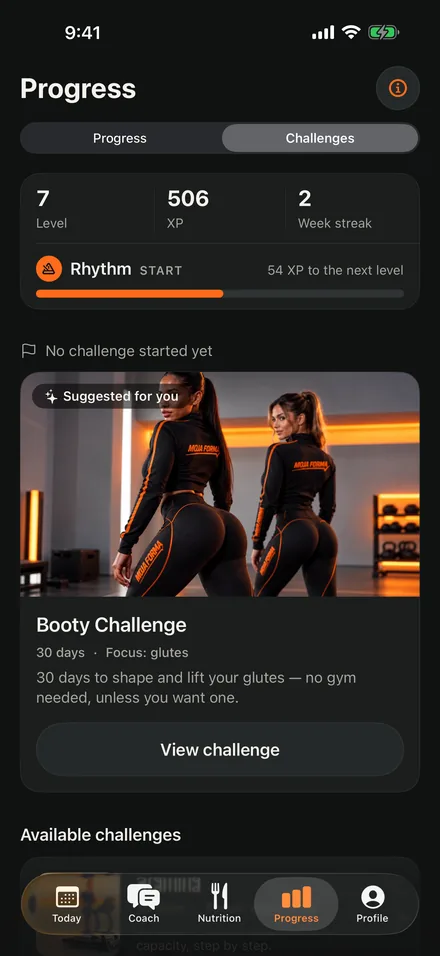
  • Booty Challenge: a month of glute and hamstring work, a few sessions a week with lighter days and full rest built in. You can do it at home without any gear; extra equipment is optional.
  • 30 Days of Conditioning: a month that moves from easy steady efforts to intervals and circuits to build your stamina.
  • Special programs: a menopause option you switch on only by your own choice, and a gentle postpartum option that starts only once you confirm your doctor's go-ahead.
  • Weight and measurements: log your weight plus neck, waist and hip measurements and see the trend over 7, 30 and 90 days.

The goal of the challenges is a stronger body and a steady routine, not a guaranteed result on the scale or in the mirror.

My Form screen with the 30-day challenges, Booty Challenge and 30 Days of Conditioning

Frequently asked questions

How many days a week should women lift weights?

Two to four days a week works well for most women. Two full body sessions are enough to make progress, while three or four let you spread the work across upper and lower body days. Pick a number you can keep up for months.

Will lifting heavy weights make me bulky?

Very unlikely. Building a lot of muscle takes years of dedicated training and eating for that purpose. For most women, lifting challenging weights leads to more strength and some muscle, not a sudden change in size.

Should women train differently than men?

The basics are the same: compound exercises, enough effort and gradual progression. Differences come from individual goals, experience, preferences and life stage, not from gender alone. Choose exercises you enjoy and that fit your goal.

Can I do a glute workout at home?

Yes. Glute bridges, single-leg hip thrusts, split squats, step-ups and reverse lunges all work at home with bodyweight. A resistance band or a backpack with some weight adds challenge as you get stronger.

Is it safe to work out after having a baby?

Only once your doctor has cleared you to exercise. Every recovery is different, so start with gentle, low-impact training and build up slowly. If anything feels wrong, stop and check with your doctor.

Get a plan built around you

Pick your goal, experience, days and equipment, or start a 30-day challenge at home. 3 days free: trial for eligible new subscribers. Then from €7.99 a month or €49.99 a year; the App Store shows the price for your country.

Download on the App Store